
Aegean Dendrochronology Project
Our key long-range goal is to build long multi-millennial scale tree-ring chronologies in the Aegean and Near East that will extend from the present to the early Holocene to cover, broadly speaking, the last 10,000 years of human and environmental history. Our raison d'être is to provide a dating method for the study of history and prehistory in the Aegean that is accurate to the year. This kind of precision has, up to now, been lacking in ancient studies of this area. Indeed, few archaeological problems stimulate as much rancor as chronology, especially that of the Eastern Mediterranean. The work of the Aegean and Near Eastern Dendrochronology Project aims to help to bring some kind of rational and neutral order to Aegean and Near Eastern chronology from the Neolithic to the present.
We also aim to provide a fundamental climate and environmental studies resource for a region which was the cradle of a number of civilizations central to human history from the origins of agriculture through to the Classical period, the Medieval period, and beyond.
To date, more than 10 million tree-ring measurements have led to the compilation of chronologies covering (but not wholly covering) some 9,000 years. Our aim is to fill in the gaps. See our bargraph to get an idea of the time periods covered. The most difficult periods for us are the first half millennium B.C. and the first millennium A.D. If you have relevant samples, please contact us!
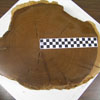 Sample of Gordion 3 timber (Juniper) from the Midas Mound Tumulus, Turkey
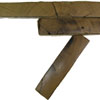 Oak samples from Northern Turkey
 An example of a crossdating plot from a site in Turkey.
Southern Levant Dendrochronology Project
The Southern Levant Dendrochronology Project (SLDP) began as a laboratory sub-project from lab member Brita Lorentzen's PhD dissertation with the aim of building up the database of dendrochronologically dated timbers from sites in the southern Levant (i.e., southern Lebanon, Israel, Jordan, and Egypt); provenancing timbers imported to the region; and building long-term chronologies for species native to the southern Levant. This project has now expanded to encompass several veins of research.
Work in building regional tree-ring chronologies for the southern Levant has included sampling native tree species (e.g., pine, oak, and juniper) from forest sites along ecological gradients, in order to investigate their response to climate and examine variability in the tree-ring record. When we compare correlations among chronologies that we and other researchers have built from East Mediterranean forest sites, it is clear that northeastern (Turkey, Cyprus, northern Lebanon, and Syria) and southeastern (Israel and Jordan) Mediterranean sites have distinct tree-ring signals, with a transition zone located in southern Lebanon. There is additional distinct variation in the tree-ring patterns of sites in the Northeast Mediterranean along altitudinal gradients, which we are investigating particularly at forest and historical-archaeological sites in Cyprus.
It is therefore necessary that we build separate chronologies of species native to the southern Levant (i.e., species that grew in the southern Levant climate zone) if we are to date timbers procured from this region successfully. Timbers imported from the northern Levant may be crossdated against our pre-existing chronological networks. Building up the tree-ring database in the southern Levant allows us to provenance timbers more precisely (i.e., indicate whether samples were procured from the southern or northern Levant, or even further outside the Levantine region). Successful dendroprovenancing has already been undertaken on historical and medieval timbers from Jaffa, Tzfat, and Jerusalem, as well as shipwreck timbers from Akko Bay (see below). This new Levantine tree-ring data additionally provides information on long-term climate and environmental trends in the region.
A second line of work has been dendrochronological, and linked radiocarbon and dendrochronological, investigation of several shipwreck sites, including Akko, Dor-Tantura, and Ma'agan Mikhael, in collaboration with the The Leon Recanati Institute for Maritime Studies at the University of Haifa, with the aim of dating these ships as accurately and precisely as possible. Dendroprovenancing (ship timber sourcing) investigations are also being undertaken.
A third project is working on juniper trees from the southern Levant and Egypt, with a view to building a long tree-ring chronology, both from living specimens and from historical and archaeological sites, and to investigate potential regional offsets in radiocarbon data in the southeastern Mediterranean. For one aspect of this work, see here
Sample contributions from archaeologists and historians and others working in the southern Levant are critical to the project’s success, so please contact us if you have any potentially relevant samples! We are interested in wood samples from Egypt, Israel, Jordan, Lebanon and Syria from the present back to the early Holocene (or before). This may include archaeological charcoal; timbers from historic buildings or other monuments; shipwrecks; old trees from forestry, construction, or other work; and subfossil trees. Suitable tree species include pine, cedar, juniper, and deciduous oak. Please note that olive, acacia, and tamarisk cannot be dendrochronologically dated. (See our submitting samples page for more information.)
If you have any relevant samples please contact Brita Lorentzen and/or Sturt Manning and we will be very pleased to hear from you.
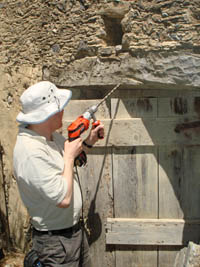
Drilling a core sample from an old house in Crete.
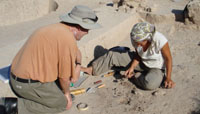
Sampling archaeological charcoal at Alalakh, southern Turkey.
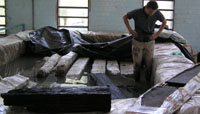
Waterlogged timbers, Bologna, Bella Arti, Italy.
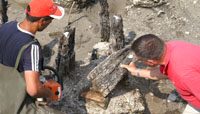
Sampling oak timbers at Yenikapı İstanbul.
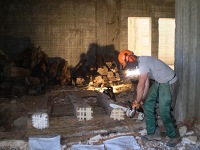
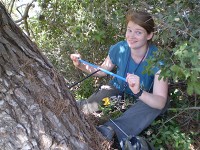
Coring pines at Rosh HaNiqra
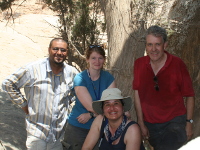
Team in Jordan 2011
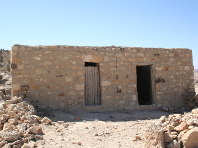
Historical structure in southern Jordan sampled for dendrochronological samples in 2012